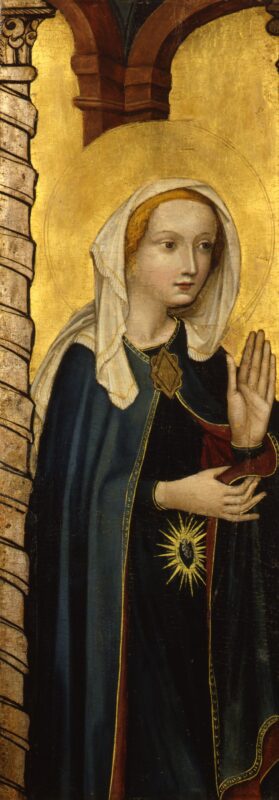
That this painting depicts Mary as pregnant only becomes apparent upon closer inspection. She has no visible baby bump; instead, the unborn Christ Child appears to float in front of her body. In this way, Mary’s pregnancy – and at the same time the special significance of Jesus, already marked by a halo and radiant aureole – is vividly brought before the viewer’s eyes.
But where is Mary looking, and why does she raise her hand? The painting, now trimmed on all sides, is a fragment of a larger wooden panel that likely formed part of an altarpiece. It originally showed the biblical scene of the Visitation: the young Mary visits her much older relative Elizabeth. Both are unexpectedly pregnant and greet each other with joy – yet only part of this scene has been preserved.